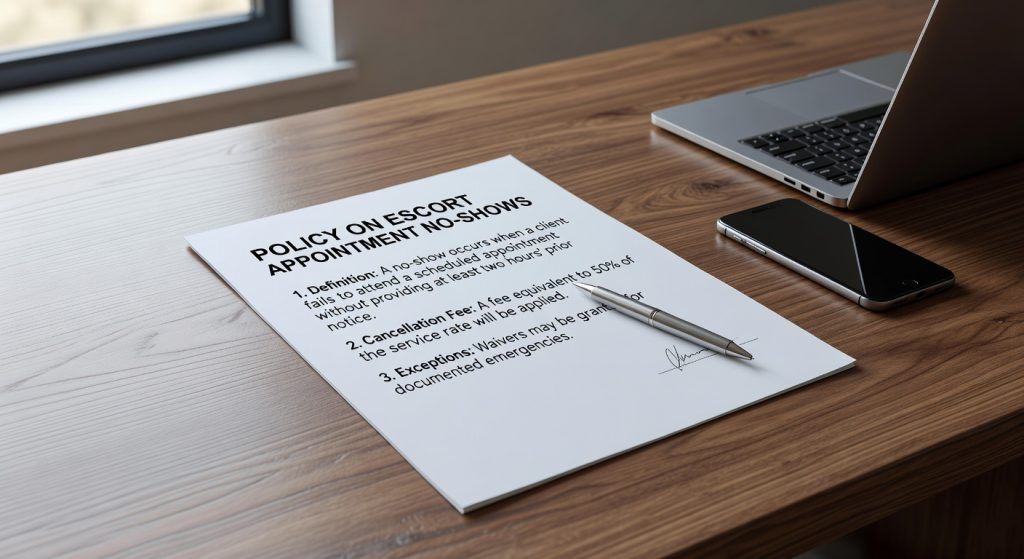

When it comes to refund rules, specify whether partial or full refunds are allowed and under what circumstances. Some escorts adopt a non-refundable deposit system to secure bookings while others may offer partial refunds if cancellation occurs within a reasonable timeframe. Whatever the approach, consistency in applying refund rules is critical. This ensures fairness and helps clients know what to expect.
To enforce policies effectively, integrate them into your booking management system or platform. Use automated reminders and confirmation requests to reduce no-shows, and keep thorough records of all communications and transactions. In cases of dispute, these records provide necessary evidence to support your policy enforcement. Train any team members involved in client bookings to adhere strictly to these policies and handle enforcement professionally.
Ultimately, a well-crafted no-show and lost-time compensation policy, coupled with clear client communication and consistent enforcement, helps protect your time and income while maintaining professional and respectful client interactions. Prioritize clarity, fairness, and transparency in all dealings to foster trust and reduce conflict.
Clear Communication Strategies
Effective communication tips are essential for escorts to ensure policy clarity and set clear client expectations before booking. One of the best ways to achieve this is by explicitly outlining the no-show and lost-time compensation policies in all initial interactions. This can be done through clear messaging on websites, booking platforms, and confirmation emails, detailing the consequences and expectations.
Providing detailed booking confirmations is another key strategy. These confirmations should reiterate the policy terms and offer easy access for clients to review them. Including a checkbox or requiring clients to acknowledge the policies before finalizing a booking helps reinforce understanding and agreement.
Escorts can also benefit from proactive communication by sending reminders closer to the appointment time, reinforcing the importance of punctuality and adherence to policies. This reduces the likelihood of misunderstandings and encourages reliability on the client’s part.
Finally, using positive and professional language in all communications fosters respect and clarity, making clients more receptive to the policies. By combining these communication tips with transparent policy clarity, escorts can significantly minimize no-shows and ensure a smoother booking experience.
Handling Disputes and Refunds
Addressing disputes over no-show fees requires a balanced and professional approach to ensure client relations remain positive. Clear dispute resolution procedures should be established and communicated upfront in the refund policies. When a client questions or challenges a no-show charge, listening carefully to their concerns demonstrates respect and willingness to engage fairly. It is essential to review the specific circumstances objectively, considering any evidence or explanations the client provides.
Refund policies must be transparent and consistently enforced to avoid misunderstandings. Flexible arrangements, such as partial refunds or credits for future services, can help reconcile disputes while reinforcing fairness. Emphasizing professionalism in every interaction reassures clients that their concerns are taken seriously and handled with integrity.
Maintaining good client relations during dispute resolution builds long-term trust and loyalty. Clear communication about the rationale behind policy enforcement helps clients appreciate the need for no-show fees and lost-time compensation. Ultimately, a fair approach to dispute resolution and refunds preserves the service provider’s reputation and supports a respectful, understanding relationship with clients.
Understanding Escort No-Show Policies
Escort no-show policies are specific rules and stipulations included in service agreements to address situations when a client fails to appear for a scheduled appointment without prior notice. These policies exist to ensure clarity and fairness for both escorts and clients by defining what constitutes a no-show, the consequences of such an occurrence, and the responsibilities expected from clients. Clearly outlining these terms helps maintain professional standards and trust between parties involved.
The primary reason escort no-show policies exist is to protect the time and income of escorts who rely on their appointments as a basis of their livelihood. When a client misses a booking without informing the escort, the escort loses valuable time that could have been offered to another client. No-show policies often include compensation or deposit forfeiture clauses to recover this lost time and discourage last-minute cancellations or no-shows, thereby fostering mutual respect and accountability.
These policies also serve to clarify client responsibilities. By agreeing to no-show terms as part of a service agreement, clients acknowledge their obligation to communicate cancellation or rescheduling in a timely manner. This encourages professionalism and consideration, reducing the likelihood of misunderstandings. It also allows escorts to manage their schedules efficiently and plan their resources accordingly, which is especially important in an industry highly sensitive to time management.
From a legal perspective, escort no-show policies must be clearly written and communicated to clients before the provision of services. This reduces disputes and ensures enforceability of the policy, provided it aligns with local laws and regulations. Ethically, the policies protect both parties by promoting transparency and fairness. Escorts are safeguarded against financial loss, while clients are informed about their obligations, creating a balanced and professional business environment.
In summary, escort no-show policies play a crucial role in maintaining professionalism within the escort service industry by outlining no-show definitions, enforcing client responsibilities, and enabling fair compensation for lost time. These policies are essential for protecting both escorts and clients legally and ethically, making sure the service agreements function effectively and respectfully.
Common Terms and Conditions
Escort services typically include specific terms and conditions in their no-show policies to ensure clarity and fairness for both parties. These terms generally outline the cancellation windows, specifying the minimum time frame required to cancel or reschedule a booking without penalty. This is crucial for managing scheduling and compensating for lost time.
Payment requirements are another vital element, often stating that advance deposits or full payments must be made at the time of booking or within a set period. This policy safeguards the service provider from last-minute cancellations that lead to financial loss. It also establishes clear expectations for clients regarding their financial obligations.
Client obligations are usually detailed as well, emphasizing the importance of punctuality, respectful communication, and adherence to the agreed booking terms. These obligations help foster a professional relationship and minimize misunderstandings.
No-show fees are a common enforcement tool within these policies. If a client fails to show up without timely notice, a predetermined fee is charged to compensate for the reserved time that could not be rebooked. This fee structure aims to balance fairness while protecting the service provider’s time and income.
Overall, clear terms and conditions, including booking rules, client obligations, and no-show fees, play a critical role in the operational efficiency of escort services, providing transparency and accountability for all parties involved.
Reasons for No-Show Policies
Escort services enforce no-show policies primarily to protect escorts’ valuable time and income. When a client fails to show up without prior notice, it results in significant loss for the escort, who could have otherwise allocated that time to another paying customer. This loss not only affects individual income but also disrupts the overall business operation of the escort service.
Implementing no-show policies is a practical measure for loss prevention. It helps ensure that the time reserved for appointments is respected and compensated even if the client does not arrive. This approach encourages responsible booking behavior, minimizing last-minute cancellations and no-shows. By doing so, the business can maintain smoother scheduling and support better time management for escorts, enabling them to optimize their daily bookings and earnings.
Moreover, these policies create a professional standard within the escort industry, underscoring the importance of mutual respect between escorts and clients. Protecting escorts from uncompensated lost time is essential to maintaining a fair and sustainable service environment. Ultimately, no-show policies safeguard both the escorts’ livelihood and the operational efficiency of the escort service.
Lost-Time Compensation: What Escorts Should Know
Lost-time compensation is a crucial concept for escorts to understand, as it directly impacts their earnings and financial well-being. Essentially, it refers to the payment an escort receives when a client fails to show up for a scheduled appointment. This practice ensures that escorts are protected from losing income due to missed appointments, which can otherwise create significant financial strain.
When clients cancel last-minute or simply do not appear, the time set aside for that engagement is lost. Unlike conventional employment, where missed work can sometimes be rescheduled or made up, escorts face unique challenges. Their income is tightly linked to the appointments they keep, and every missed session translates into lost earnings. Lost-time compensation policies are designed to address this vulnerability by establishing a fair system for financial protection.
In practice, lost-time compensation typically involves a pre-agreed fee or portion of the appointment charge that clients agree to pay if they fail to show up as scheduled. This fee compensates the escort for the time they reserved, which could have been offered to other clients. Such policies not only help maintain steady income but also serve as a deterrent against clients who might otherwise take appointments lightly.
For escorts, implementing a clear lost-time compensation policy is an important step in safeguarding financial security. It provides a formal framework for handling no-shows and last-minute cancellations, making sure that their time and effort are respected. This policy not only stabilizes escort earnings but also establishes professional boundaries with clients, reinforcing the value of the escort’s time.
Ultimately, lost-time compensation plays a vital role in the escort industry by protecting providers from the negative consequences of missed appointments. It offers a reliable form of financial protection that supports the sustainable management of escort earnings, ensuring that escorts can focus on delivering their services without constant worry over lost time and income.
Calculating Compensation for No-Shows
When determining compensation calculation for no-shows, it’s essential to base the amount on clear rate agreements and booking durations agreed upon in advance. Typically, the compensation is calculated by considering the hourly rate set for the service and the total time lost due to the missed appointment. This ensures that the compensation fairly reflects the income lost by the escort.
One common method is to charge a percentage of the hourly or session rate for the reserved duration that was not honoured. For example, if a booking was made for two hours but the client failed to show, the compensation might equal two hours of the agreed hourly rate. This approach is straightforward and prevents discrepancies.
Alternatively, some agreements specify partial compensation if the no-show happens within a certain grace period, gradually increasing the compensation amount as the time of absence extends. This method respects the possibility of minor delays while still protecting against lost income.
Bookers and escorts should clearly outline these terms in their contracts or service agreements to avoid disputes. By linking the compensation directly to booking duration and hourly rates, both parties can expect a fair resolution that covers the escort’s lost time and income effectively.
Legal and Ethical Aspects of Compensation
In the UK escort industry, understanding the legal rights and ethical policies surrounding lost-time compensation is essential for both service providers and clients. The legal framework governing this area is shaped by general contract law principles, which emphasize clear client agreements. These agreements should explicitly outline terms regarding cancellations, no-shows, and compensation to ensure fair treatment and reduce disputes.
Ethically, escorts and agencies must establish transparent policies that respect the time and effort invested, while balancing the client’s right to fair service. Loss of booked time can cause significant financial impact, making fair compensation a justified expectation when clients breach agreed arrangements. However, ethical policies discourage punitive measures and instead focus on reasonable and mutually agreed-upon solutions to protect both parties’ interests.
Client agreements often serve as the foundation for enforcing these policies. They should be drafted to cover scenarios of no-shows and late cancellations, ensuring legal rights are safeguarded without ambiguity. Including clear refund and compensation clauses helps maintain professionalism and trust. Ultimately, the aim is to foster a respectful environment where lost-time compensation is managed fairly and ethically, aligning with the legal standards in the UK escort sector.
Best Practices for Escort No-Show and Compensation Policies
Creating and enforcing a clear no-show and compensation policy is essential for smooth booking management and to maintain professional client relationships. Start by drafting a policy that clearly outlines the expectations for both parties. Define what constitutes a no-show and specify the timeframe within which a client must cancel or notify in case of any changes. This clarity helps prevent misunderstandings and sets a foundation for policy enforcement.
Effective client communication is key to minimizing disputes related to no-shows. Ensure the policy is communicated upfront at the time of booking, ideally through written confirmation such as email or SMS. Reinforce the refund rules in these messages so clients understand the consequences of failing to show up or cancel within the allowed period. Transparency in communication builds trust and reduces the likelihood of disagreements.
When it comes to refund rules, specify whether partial or full refunds are allowed and under what circumstances. Some escorts adopt a non-refundable deposit system to secure bookings while others may offer partial refunds if cancellation occurs within a reasonable timeframe. Whatever the approach, consistency in applying refund rules is critical. This ensures fairness and helps clients know what to expect.
To enforce policies effectively, integrate them into your booking management system or platform. Use automated reminders and confirmation requests to reduce no-shows, and keep thorough records of all communications and transactions. In cases of dispute, these records provide necessary evidence to support your policy enforcement. Train any team members involved in client bookings to adhere strictly to these policies and handle enforcement professionally.
Ultimately, a well-crafted no-show and lost-time compensation policy, coupled with clear client communication and consistent enforcement, helps protect your time and income while maintaining professional and respectful client interactions. Prioritize clarity, fairness, and transparency in all dealings to foster trust and reduce conflict.
Clear Communication Strategies
Effective communication tips are essential for escorts to ensure policy clarity and set clear client expectations before booking. One of the best ways to achieve this is by explicitly outlining the no-show and lost-time compensation policies in all initial interactions. This can be done through clear messaging on websites, booking platforms, and confirmation emails, detailing the consequences and expectations.
Providing detailed booking confirmations is another key strategy. These confirmations should reiterate the policy terms and offer easy access for clients to review them. Including a checkbox or requiring clients to acknowledge the policies before finalizing a booking helps reinforce understanding and agreement.
Escorts can also benefit from proactive communication by sending reminders closer to the appointment time, reinforcing the importance of punctuality and adherence to policies. This reduces the likelihood of misunderstandings and encourages reliability on the client’s part.
Finally, using positive and professional language in all communications fosters respect and clarity, making clients more receptive to the policies. By combining these communication tips with transparent policy clarity, escorts can significantly minimize no-shows and ensure a smoother booking experience.
Handling Disputes and Refunds
Addressing disputes over no-show fees requires a balanced and professional approach to ensure client relations remain positive. Clear dispute resolution procedures should be established and communicated upfront in the refund policies. When a client questions or challenges a no-show charge, listening carefully to their concerns demonstrates respect and willingness to engage fairly. It is essential to review the specific circumstances objectively, considering any evidence or explanations the client provides.
Refund policies must be transparent and consistently enforced to avoid misunderstandings. Flexible arrangements, such as partial refunds or credits for future services, can help reconcile disputes while reinforcing fairness. Emphasizing professionalism in every interaction reassures clients that their concerns are taken seriously and handled with integrity.
Maintaining good client relations during dispute resolution builds long-term trust and loyalty. Clear communication about the rationale behind policy enforcement helps clients appreciate the need for no-show fees and lost-time compensation. Ultimately, a fair approach to dispute resolution and refunds preserves the service provider’s reputation and supports a respectful, understanding relationship with clients.

I have always been fascinated by the sociology of companionship and the complex dynamics of personal connection within the adult industry. My focus is on providing clear, respectful insights that prioritise safety and transparency for clients and providers alike. I believe in approaching this topic with a genuine curiosity and a non-judgmental perspective.